
Pregnancy is a profound journey, but in India, it often comes with a whirlwind of advice from family and social media. Navigating our vibrant food culture—rich in spices, street food, and traditional sweets—can be confusing. To ensure the safety of both mother and baby, especially during the sensitive first trimester, it is vital to distinguish between tradition and medical safety.
Why Food Safety Matters
Consuming contaminated or unsafe food during pregnancy can lead to severe complications. These include food poisoning (Salmonella or E. coli), dehydration, and infections like Listeria, which can trigger preterm labor or miscarriage. Poor maternal nutrition due to illness can also result in low birth weight or fetal development issues.
Top Indian Foods to Avoid or Modify
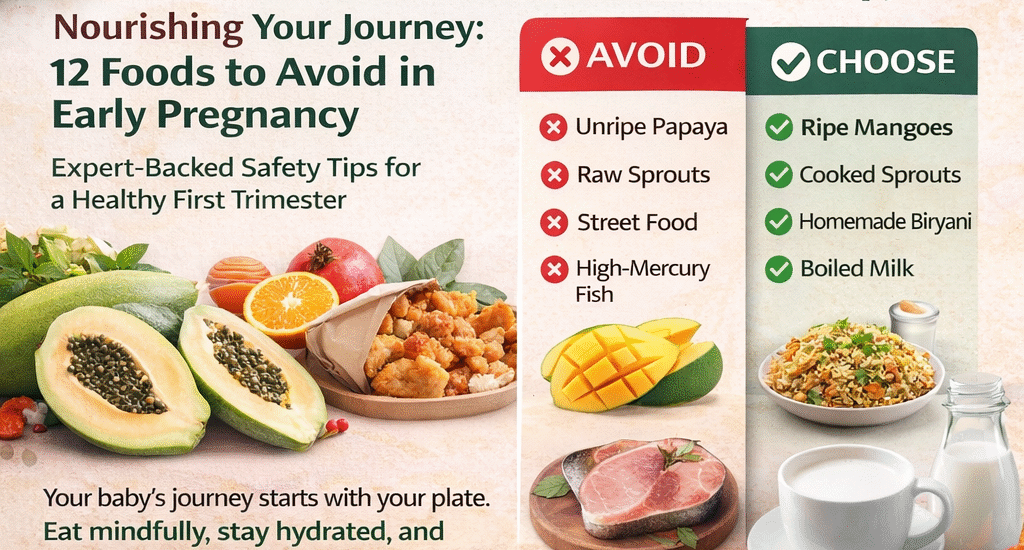
- Unripe (Raw) Papaya: Contains high levels of latex, which can act like oxytocin and prostaglandin, potentially triggering uterine contractions or early labor.
- Safe Alternative: Small amounts of fully ripe papaya are generally considered safe later in pregnancy.
- Pineapple: Contains bromelain, an enzyme that may soften the cervix if consumed in very large quantities.
- Safe Alternative: Fiber-rich fruits like guava, mango, and pomegranate.
- Raw Sprouts: Moong or chana sprouts can harbor bacteria within the seeds that cannot be washed away.
- Safe Alternative: Thoroughly steam or sauté sprouts before consumption.
- Excessive Chai & Caffeine: High caffeine intake is linked to increased miscarriage risks. Limit intake to under 200 mg per day (about 1–2 small cups of light chai).
- Unpasteurized Dairy: Raw milk or curd can carry harmful bacteria.
- Safe Alternative: Always boil fresh milk properly before use.
- High-Mercury Fish: Avoid large fish like Shark (Mori) or King Mackerel, as mercury can damage the baby’s developing nervous system.
- Safe Alternative: Local low-mercury options like Rohu, Catla, or Pomfret.
- Undercooked Meat & Eggs: Items like half-fried eggs or pink-centered kebabs can carry Toxoplasma or Salmonella.
- Safe Alternative: Ensure meat reaches an internal temperature of 75°C.
- Heavy Biryani: While delicious, restaurant biryani is often loaded with excess oil and garam masala, leading to severe acidity and heartburn.
- Safe Alternative: Home-cooked biryani using brown rice and mild spices like cumin and turmeric.
- Adulterated Mithai: Commercial sweets may contain unsafe coloring or excessive sugar, increasing the risk of gestational diabetes.
- Excessive Pickles (Achar): High sodium levels can lead to water retention and high blood pressure.
- Street Food: Roadside items like Pani Puri or cut fruits carry a high risk of waterborne infections due to unhygienic handling.
- Raw Peanuts (Groundnuts): Generally safe, but should be avoided if there is a strong family history of severe peanut allergies.
Debunking Common Myths
- The “Eating for Two” Myth: You need quality nutrition, not double the calories. Focus on iron, protein, and folate.
- The “Heat” Myth: While unripe papaya is risky, fruits like mango and guava are perfectly safe and provide essential Vitamin C.
When to Seek Help
Consult your doctor immediately if you experience severe vomiting, signs of dehydration, high fever, or stomach pain. Your journey to motherhood begins on your plate; eat mindfully, stay hydrated with coconut water, and prioritize freshly cooked meals.