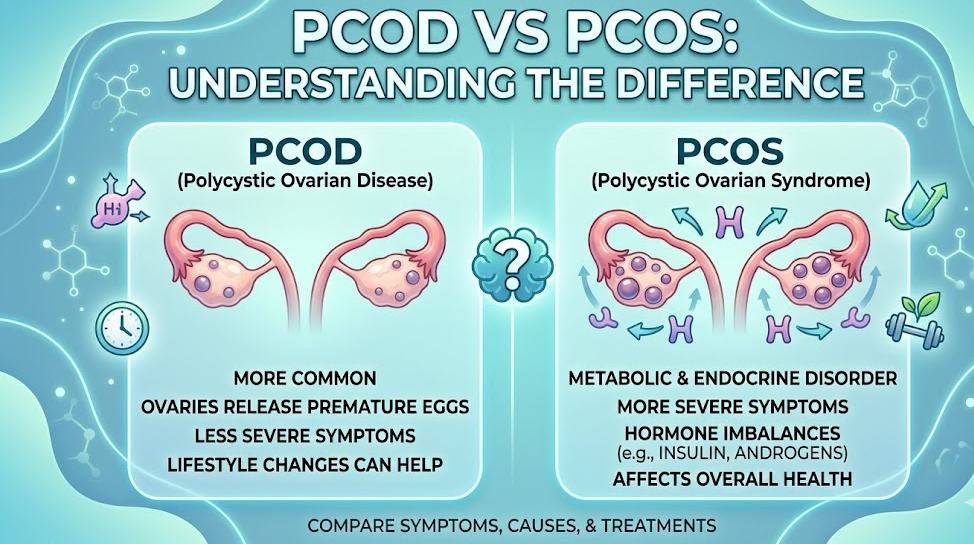
Many women often use PCOD and PCOS interchangeably, assuming they are the same condition. However, while they share some similarities, they are clinically different in terms of cause, severity, and long-term health impact. Understanding the distinction between PCOD (Polycystic Ovarian Disease) and PCOS (Polycystic Ovary Syndrome) is essential for early diagnosis, effective management, and better reproductive health outcomes.
What Is PCOD (Polycystic Ovarian Disease)?
PCOD (Polycystic Ovarian Disease) is a condition in which the ovaries produce multiple immature or partially mature eggs. Over time, these eggs can develop into small cysts, causing the ovaries to become enlarged.
What Happens in PCOD?
In a normal menstrual cycle, one mature egg is released during ovulation. In PCOD, hormonal imbalance interferes with this process, preventing proper egg maturation. As a result, immature follicles accumulate in the ovaries.
Causes of PCOD
PCOD is primarily associated with lifestyle and hormonal factors, including:
- Unhealthy dietary habits (high sugar and processed foods)
- Sedentary lifestyle
- Chronic stress
- Irregular sleep patterns
- Mild elevation of androgen (male hormone) levels
Common Symptoms of PCOD
- Irregular menstrual cycles
- Weight gain or difficulty losing weight
- Acne and oily skin
- Hair thinning or mild hair loss
- Excess facial or body hair (hirsutism)
- Fatigue and bloating
Impact on Fertility
Ovulation may be irregular but is usually not completely absent. With appropriate lifestyle modifications and medical guidance, many women with PCOD can conceive naturally.
What Is PCOS (Polycystic Ovary Syndrome)?
PCOS (Polycystic Ovary Syndrome) is a more complex endocrine and metabolic disorder that affects multiple systems in the body, not just the ovaries.
What Happens in PCOS?
In PCOS, the ovaries produce excess androgens, which disrupt normal ovulation. This hormonal imbalance is often associated with insulin resistance, leading to further metabolic complications.
Causes of PCOS
The exact cause of PCOS is not fully understood, but contributing factors include:
- Genetic predisposition
- Insulin resistance
- Chronic low-grade inflammation
- Hormonal imbalance affecting the brain-ovary axis
Common Symptoms of PCOS
- Highly irregular or absent menstrual periods
- Heavy or prolonged bleeding
- Severe acne (face, chest, back)
- Hair thinning or male-pattern hair loss
- Central (abdominal) weight gain
- Darkened skin patches (acanthosis nigricans)
- Mood disturbances such as anxiety or depression
- Difficulty conceiving
Impact on Fertility
PCOS can lead to anovulation (absence of ovulation), making conception more challenging. However, with timely medical intervention and lifestyle management, fertility outcomes can improve significantly.
| Aspect | PCOD | PCOS |
|---|---|---|
| Nature | Ovarian condition | Endocrine & metabolic disorder |
| Cause | Lifestyle + mild hormonal imbalance | Hormonal imbalance + insulin resistance |
| Severity | Generally mild | More complex and chronic |
| Ovulation | Irregular but present | Often absent |
| Fertility Impact | Usually manageable | May require medical support |
| Hormonal Changes | Mild androgen increase | Significant androgen excess |
| Health Risks | Low long-term risk | Increased risk of diabetes, hypertension, heart disease |
| Management | Lifestyle modification | Medical treatment + lifestyle changes |
Key Takeaway
In simple terms:
- PCOD primarily affects ovarian function and is often manageable with lifestyle correction.
- PCOS is a broader metabolic and hormonal condition that requires long-term medical care.
Early diagnosis and personalized treatment play a crucial role in managing both conditions effectively.
Conclusion
Both PCOD and PCOS are common conditions affecting women of reproductive age. While PCOD is generally less severe and more lifestyle-driven, PCOS requires comprehensive medical management due to its systemic impact.
With early intervention, balanced nutrition, regular physical activity, and appropriate medical care, women with either condition can lead healthy lives and achieve successful reproductive outcomes.
Frequently Asked Questions (FAQs)
1. Are PCOD and PCOS the same?
No, they are different conditions. PCOD is an ovarian disorder, while PCOS is a broader hormonal and metabolic syndrome.
2. Which condition is more serious?
PCOS is generally more complex and associated with long-term health risks if not managed properly.
3. Can PCOD or PCOS be cured?
There is no permanent cure, but both conditions can be effectively managed with lifestyle changes and medical treatment.
4. Do these conditions always cause infertility?
No. Many women with PCOD or PCOS conceive naturally or with medical assistance.
5. When should I consult a doctor?
If you experience irregular periods, unexplained weight gain, acne, or excess hair growth, it is advisable to consult a gynecologist for evaluation.