Pregnancy is a journey filled with anticipation, excitement, and careful monitoring. One of the most reassuring parts of this journey is seeing your baby during an ultrasound scan. At Galaxy Hospital, we believe that prenatal imaging is more than just a first glimpse of your baby—it is a crucial medical tool that helps doctors monitor fetal development and ensure a safe and healthy pregnancy.
Pregnancy scans help detect potential concerns early, monitor your baby’s growth, and guide doctors in providing the best possible care for both mother and child.
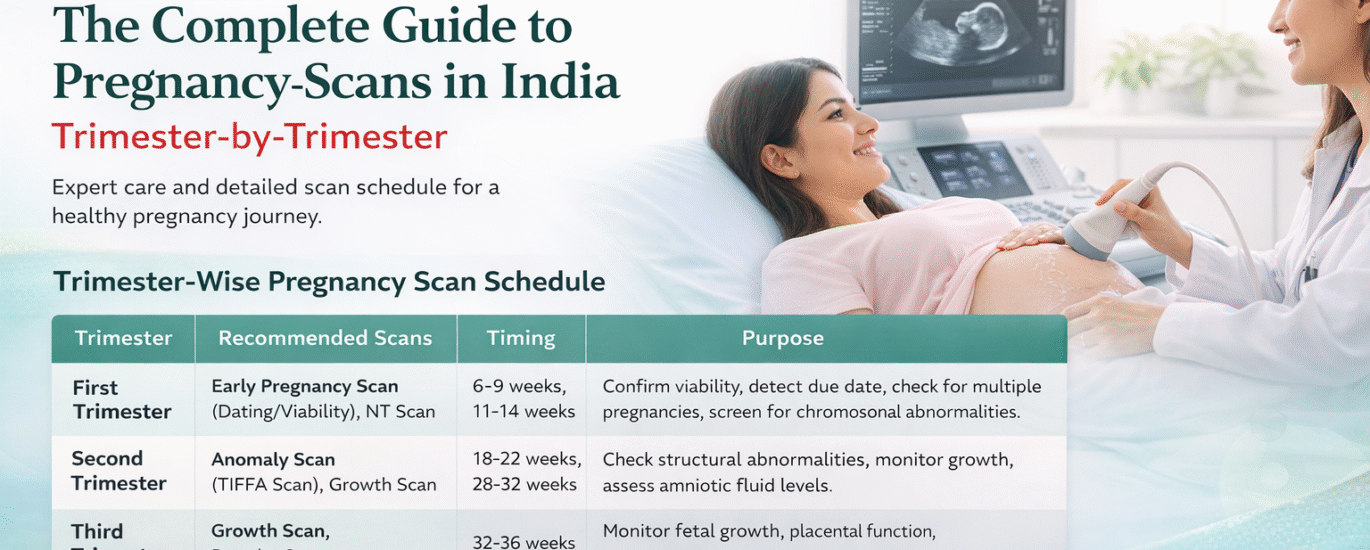
Below is a complete guide to the pregnancy scan schedule in India, including when each scan is done, why it is important, and how to prepare for it.
| Trimester | Recommended Scans | Timing | Purpose |
|---|---|---|---|
| First Trimester | Early Pregnancy Scan (Dating/Viability), NT Scan | 6–9 weeks, 11–14 weeks | Confirm pregnancy viability, determine due date, detect multiple pregnancies, and screen for chromosomal abnormalities. |
| Second Trimester | Anomaly Scan (TIFFA), Growth Scan | 18–22 weeks, 28–32 weeks | Evaluate fetal anatomy, identify structural abnormalities, and monitor growth and amniotic fluid levels. |
| Third Trimester | Growth Scan, Doppler Scan | 32–36 weeks | Assess fetal growth, placental function, and blood flow to ensure the baby is thriving. |
Detailed Breakdown of Each Pregnancy Scan
1. Early Pregnancy Scan (Dating / Viability Scan)
Timing: 6–9 weeks
This is usually the first ultrasound during pregnancy and plays an important role in confirming the pregnancy.
What it checks:
- Presence of fetal heartbeat
- Accurate pregnancy dating and due date calculation
- Location of pregnancy (to rule out ectopic pregnancy)
- Number of fetuses (single or multiple pregnancy)
This scan provides reassurance that the pregnancy is developing normally in its earliest stage.
2. NT Scan (Nuchal Translucency Scan)
Timing: 11–14 weeks
The NT scan is a key screening test performed during the first trimester.
What it checks:
- Thickness of fluid at the back of the baby’s neck
- Early development of the nasal bone
- Initial evaluation of major organs
This scan helps assess the risk of chromosomal conditions such as Down syndrome and supports early detection of potential abnormalities.
3. Anomaly Scan (TIFFA Scan)
Timing: 18–22 weeks
Also known as the Targeted Imaging for Fetal Anomalies (TIFFA) scan, this is one of the most detailed scans during pregnancy.
What it checks:
- Baby’s brain and spine
- Heart structure and function
- Facial features and limbs
- Abdominal organs
- Overall fetal development
This scan allows doctors to carefully evaluate your baby’s anatomy and structural development.
4. Growth Scan
Timing: 28–32 weeks
During the third trimester, the growth scan helps ensure that your baby is developing at a healthy rate.
What it checks:
- Estimated fetal weight
- Amniotic fluid levels
- Placental position and health
- Baby’s movements and general well-being
Your doctor may recommend additional growth scans if closer monitoring is required.
5. Doppler Scan
Timing: 32–36 weeks (or earlier in high-risk pregnancies)
A Doppler scan evaluates blood flow between the mother, placenta, and baby.
What it checks:
- Umbilical artery blood flow
- Placental circulation
- Signs of fetal distress or restricted growth
This scan is particularly helpful in detecting Intrauterine Growth Restriction (IUGR) and ensuring the baby receives adequate oxygen and nutrients.
How to Prepare for Pregnancy Scans
Proper preparation helps ensure clear imaging and a comfortable scanning experience.
First Trimester
A full bladder is often required for better visibility.
Drink 3–4 glasses of water about one hour before the scan.
Second Trimester
Usually, a moderately full bladder is sufficient. Wearing loose clothing helps make the process easier.
Third Trimester
Typically, no special preparation is required, unless your doctor advises otherwise.
Important Precautions Before Your Scan
To ensure a smooth appointment:
- Avoid wearing heavy jewellery during the scan
- Carry all previous medical and scan reports
- Eat a light meal unless fasting is recommended
- Arrive a little early to avoid a rushed examination
These simple steps help make your prenatal imaging experience smoother and more comfortable.
Specialized Pregnancy Scans at Galaxy Hospital
Some pregnancies require extra monitoring, particularly if the mother has conditions such as hypertension, diabetes, or previous pregnancy complications.
In such cases, doctors may recommend:
Targeted Level-II Scan
A more detailed anatomical scan if abnormalities are suspected.
Serial Growth Scans
Multiple growth scans to monitor babies with potential growth concerns.
Doppler Studies
To assess blood circulation when fetal movement is reduced or growth appears slow.
Fetal Echocardiography
A specialized ultrasound to evaluate the baby’s heart structure and function.
These advanced imaging techniques help doctors detect potential concerns early and ensure the best possible outcomes for both mother and baby.
Expert Advice from Galaxy Hospital
Timely pregnancy scans are essential for monitoring your baby’s development and ensuring peace of mind throughout your pregnancy journey.
At Galaxy Hospital, our experienced radiology and obstetric teams use advanced imaging technology to provide accurate diagnoses and compassionate care—because your baby’s health is our highest priority.