

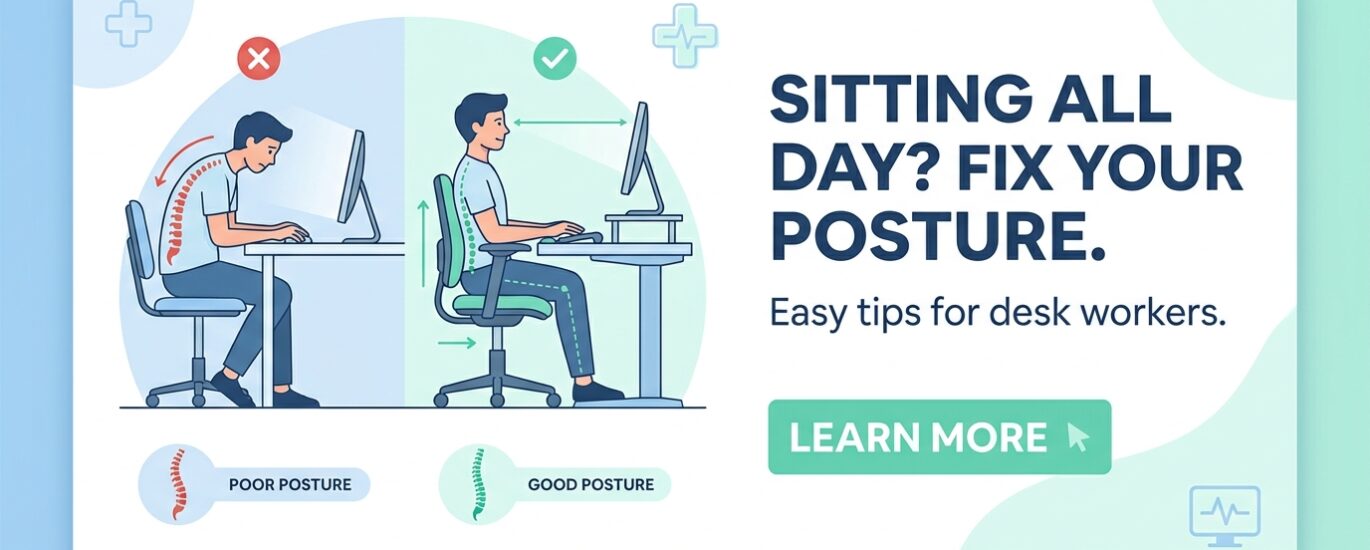
In today’s digital world, desk jobs have become the norm. While they may seem physically harmless, sitting for long hours can quietly take a toll on your joints, posture, and overall health. From stiff necks to chronic back pain, the effects of a sedentary lifestyle are more serious than they appear.
Let’s break down the risks—and more importantly—how to protect your body.
Why Desk Jobs Can Harm Your Body
When you sit for extended periods, your body stays in a fixed position. Over time, this leads to muscle imbalances, joint stiffness, and poor alignment. Reduced movement also slows circulation and weakens the muscles that support your spine.
The result? Gradual wear and tear that can turn into long-term discomfort or even chronic pain.
Common Health Risks of Desk Jobs
1. Poor Posture
Slouching or leaning forward while working strains your neck, shoulders, and lower back. This often leads to “tech neck” and rounded shoulders.
2. Back and Neck Pain
Prolonged sitting compresses spinal discs and increases pressure on the lower back, leading to stiffness and pain.
3. Joint Stiffness
Lack of movement reduces joint lubrication, especially in the hips, knees, and shoulders, making them feel tight and uncomfortable.
4. Repetitive Strain Injuries (RSI)
Continuous typing and mouse use can lead to wrist, elbow, or shoulder issues over time.
5. Reduced Flexibility & Weak Muscles
Sitting weakens core and glute muscles while tightening hip flexors—creating imbalance in your body.
Warning Signs You Shouldn’t Ignore
- Persistent neck or back pain
- Tingling or numbness in hands or legs
- Stiff shoulders or hips
- Headaches after screen time
- Poor posture even when standing
These symptoms often start small but can worsen if ignored.
How to Protect Your Joints & Posture
1. Set Up an Ergonomic Workspace
- Keep your screen at eye level
- Use a chair with proper lumbar support
- Keep feet flat on the floor
- Position keyboard and mouse at elbow height
A good setup reduces unnecessary strain on your joints.
2. Follow the 30–60 Minute Rule
Stand up, stretch, or walk for a few minutes every 30–60 minutes. Movement helps improve blood flow and prevents stiffness.
3. Practice Good Sitting Posture
- Keep your back straight
- Relax your shoulders
- Avoid crossing legs for long periods
- Keep your head aligned with your spine
Small posture corrections make a big difference over time.
4. Strengthen Key Muscle Groups
Focus on:
- Core muscles (for spine support)
- Glutes (to reduce lower back strain)
- Upper back (to correct posture)
Exercises like planks, bridges, and rows are highly effective.
5. Stretch Daily
Incorporate simple stretches for:
- Neck
- Shoulders
- Hamstrings
- Hip flexors
Stretching helps maintain flexibility and reduces tension buildup.
6. Stay Active Outside Work
Regular physical activity—like walking, yoga, or gym workouts—balances out long sitting hours and keeps joints healthy.
7. Use Supportive Tools
- Ergonomic chair or cushion
- Wrist support pads
- Standing desk (if possible)
These tools can significantly reduce strain during long work hours.
When to Seek Medical Advice
Consult a healthcare professional if:
- Pain persists for weeks
- You experience numbness or weakness
- Movement becomes restricted
- Pain interferes with daily tasks
Early care prevents minor issues from becoming chronic problems.
Final Thoughts
A desk job doesn’t have to mean poor health. With the right habits, posture awareness, and regular movement, you can protect your joints and maintain a healthy spine.
Your body is not designed to sit all day—but with small, consistent changes, you can stay pain-free and productive.